Part of our Core Hub on Insurance Claims in Türkiye: This sub-dive examines coverage disputes, damage claims, and hull and machinery recoveries for yachts, pleasure craft, and chartered vessels. For the broader framework of insurance claim denials, arbitration, and insurer default, see our main pillar: Insurance Claim Disputes in Türkiye: The Foreign Policyholder's Guide.
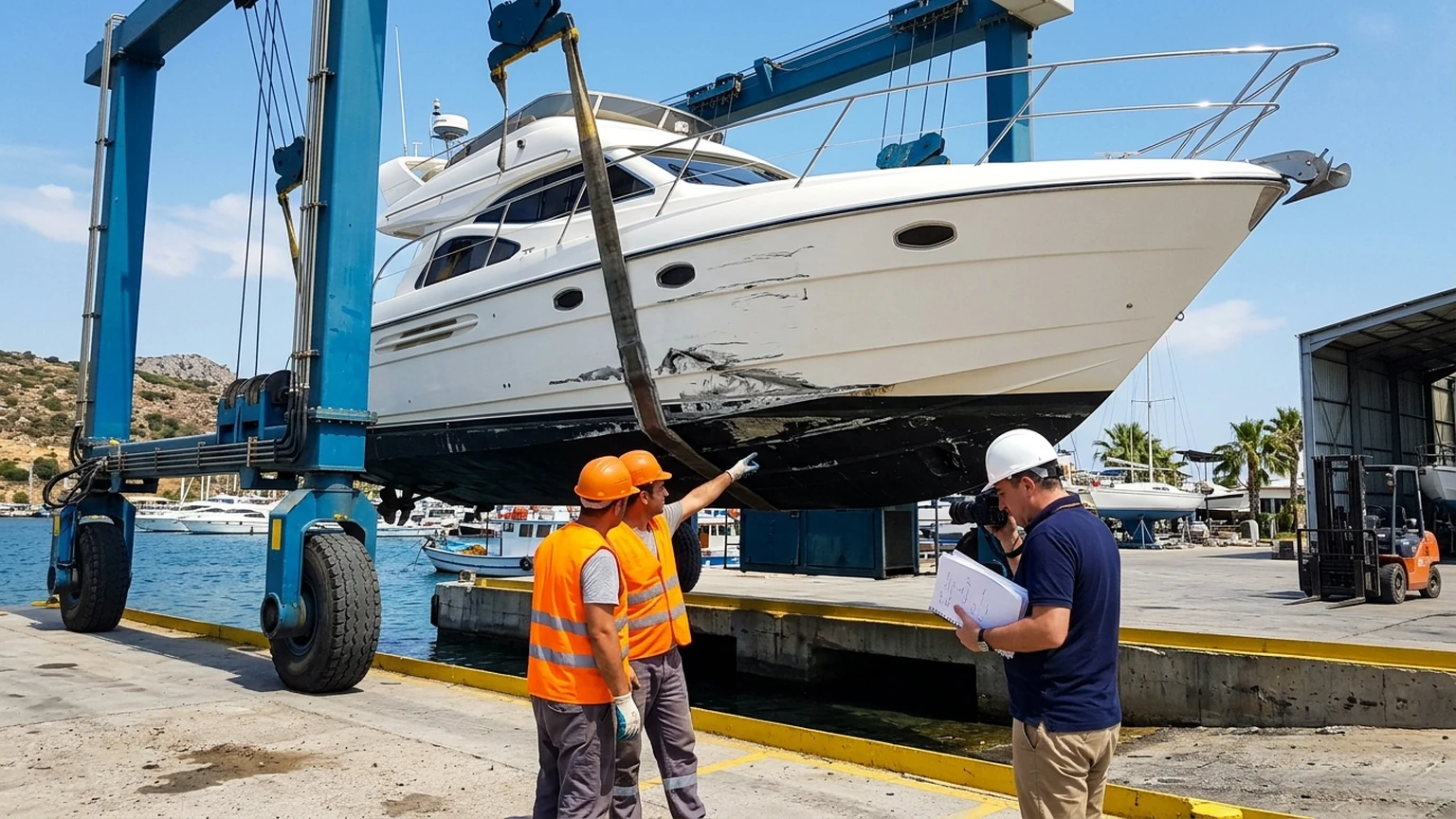
1. The Statutory Architecture of Marine Insurance in Turkish Waters
Marine casualty claims in Turkish waters operate at the intersection of two distinct books of the Turkish Commercial Code (Law No. 6102, referred to as TTK): Book Five (Insurance Law, Articles 1401 to 1520) and Book Six (Maritime Commerce, Articles 931 to 1400). While international recreational boating predominantly references English maritime contracts such as the Institute Yacht Clauses (CL 328) or American Yacht Forms, any policy issued by a Turkish-licensed insurer or executed within Turkish territorial waters is anchored firmly in Turkish substantive law.
Under Turkish jurisprudence, marine insurance contracts are contracts of indemnity governed by the overarching principle of utmost good faith (hüsnüniyet). Crucially, the Turkish Commercial Code incorporates mandatory protective rules that override conflicting policy conditions where those conditions disproportionately prejudice the policyholder. Key statutory pillars include:
- Principle of Indemnity (Tazminat İlkesi): The insured cannot recover more than the actual financial loss sustained, capped by the agreed insured hull value (sigorta bedeli) specified in the policy schedule.
- Burden of Proof on Exclusions (İspat Yükü): Article 1409 of the TTK establishes the fundamental statutory rule: the insurer bears the legal burden of proving that a reported maritime casualty falls squarely within a specific contractual exclusion or was caused by an excepted peril.
- Inviolable Consumer & Policyholder Protections: Policy clauses that seek to impose automatic forfeiture of indemnity without examining whether a procedural omission prejudiced the insurer are rendered void under Article 1452 of the TTK.
Foreign yacht owners who moor their vessels in marinas across Bodrum, Cesme, Fethiye, Marmaris, or Istanbul frequently assume their domestic brokerage conditions automatically govern casualty resolution. In reality, once a casualty occurs within Turkish jurisdiction, local maritime authorities (Liman Başkanlığı), Turkish salvage operators (Kıyı Emniyeti Genel Müdürlüğü), and Turkish procedural rules dictate the evidentiary timeline.
2. Core Policies: Hull & Machinery (H&M), P&I, and Charter Cover
Resolving a marine damage claim requires immediate classification of the three core insurance structures common to private yachts and commercial charter fleets:
| Policy Structure | Primary Subject Matter | Common Casualty Scenarios | Key Underwriting Defense |
|---|---|---|---|
| Hull & Machinery (H&M) | Vessel structure, engines, masts, rigging, navigational electronics, tender boats, and onboard equipment | Grounding, underwater rock strikes, engine room fires, mast dismasting, violent winter storms, marina collisions | Pre-existing unseaworthiness, inadequate winterisation, improper machinery maintenance, expired classification or registry |
| Protection & Indemnity (P&I) | Third-party civil liabilities, wreck removal, environmental pollution, passenger bodily injury or death | Marina berth damage, fuel spills during bunkering, collision with another yacht, passenger injury on swimming platform | Gross negligence of the master/owner, illegal chartering without commercial passenger permits, intentional statutory breaches |
| Charterer's Liability & Security Deposit | Bareboat or skippered charterer indemnities for hull deductible and minor structural damage | Anchor windlass burnout, propeller entanglement, gelcoat gouging, tender loss, auxiliary engine flooding | Breach of territorial cruising limits, operating after sunset against charter terms, undeclared skipper substitution |
In charter disputes, tension frequently erupts between the yacht charter fleet operator and the foreign holidaymaker who signed a bareboat charter agreement. Commercial charter agreements typically require the charterer to post a security deposit (ranging from €2,000 to €10,000). If the vessel suffers catastrophic grounding or mechanical failure, the operator\'s insurer often attempts to retain the deposit and subrogate against the foreign charterer personally. Defeating such subrogation requires demonstrating that the casualty resulted from an insured marine peril rather than gross personal negligence.
3. Grounding, Fire, Collision, and Sinking: Core Causation Disputes
The vast majority of high-quantum yacht insurance disputes in Türkiye involve four recurring casualty types, each presenting distinct technical and legal hurdles:
1. Grounding and Keel Impact (Karaya Oturma): Navigating the intricate archipelagos and rocky bays of the Aegean and Mediterranean coasts creates significant grounding risks. A severe impact on an underwater rock often compromises the keel bolts, cracks the internal matrix or grid structure, and causes structural water ingress. Insurers routinely argue that the keel damage was cumulative, stemming from unrecorded historical groundings rather than the single reported voyage event.
2. Engine Room and Electrical Fires (Yangın): Lithium-ion battery installations, bow-thruster electrical lines, and marine generator exhausts are frequent origins of devastating fires that result in total burnouts. Insurers almost invariably raise defenses alleging non-standard aftermarket electrical modifications or failure to carry out required fire-extinguisher certifications.
3. Marina and Anchorage Collisions (Çatma): During seasonal meltemi winds or winter gales, yachts frequently break free from marina moorings or anchorages, colliding with neighbouring vessels. These multi-party claims engage Article 1286 of the TTK regarding marine collision liability, requiring precise apportionment between fault-based negligence and inevitable force majeure (mücbir sebep).
4. Progressive Flooding and In-Berth Sinking (Batma): When an unattended yacht sinks at its berth due to failed sea-cocks, split cooling hoses, or bilge pump failure, insurers immediately invoke statutory warranties of ongoing maintenance and diligence. Proving that seacocks and through-hull fittings underwent regular documented servicing is crucial to preserving the indemnity.
4. Constructive Total Loss & Notice of Abandonment (Ferağ)
When a yacht sustains severe structural trauma, the boundary between partial loss (kısmi zıya) and total loss (tam zıya) becomes the central battlefield. Turkish marine insurance law recognises two forms of total loss:
- Actual Total Loss (Fiili Tam Zıya): The vessel is completely destroyed, disintegrated, or sinks in deep waters where physical recovery is scientifically or technically impossible.
- Constructive Total Loss (Hükmi Tam Zıya): The vessel remains physically retrievable, but the estimated cost of salvage, refloating, towage, shipyard repair, and structural recertification would exceed the insured agreed value of the yacht.
Where constructive total loss occurs, Article 1470 of the TTK and standard marine insurance rules provide the policyholder with the right to tender a formal Notice of Abandonment (Ferağ Bildirimi). By serving this notice, the yacht owner relinquishes all ownership rights and salvage claims over the wreck to the insurer, demanding immediate payment of the full agreed policy amount (sigorta bedeli).
Underwriters frequently resist abandonment because selling an extensively damaged composite or aluminium hull yields low salvage recovery. Instead, they produce biased repair estimates proposing piecemeal, substandard repairs in low-cost boatyards to keep the calculation just below the constructive total loss threshold. Countering this tactic requires an accredited naval architect\'s comprehensive quote from established shipyards (e.g., in Tuzla, Bodrum, or Antalya Free Zone) confirming that genuine restoration to class standard exceeds the policy value.
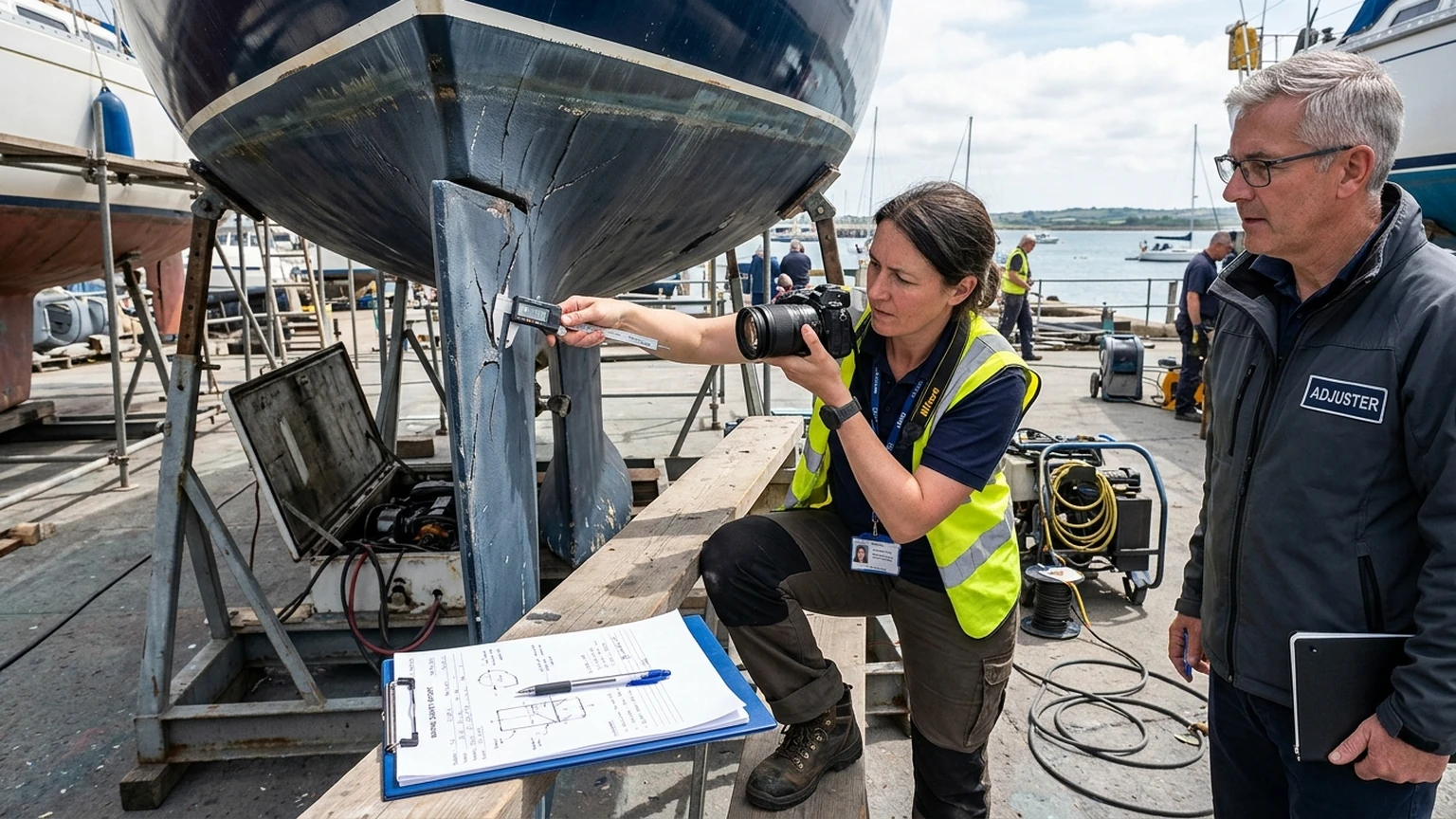
5. The Independent Survey Report (Ekspertiz): Overcoming Unilateral Adjusters
The moment a casualty is reported, the insurer appoints a licensed insurance loss adjuster (sigorta eksper). While Turkish law obligates insurance adjusters to act independently and objectively under Insurance Law No. 5684, the reality is that adjusters appointed and remunerated by underwriters frequently adopt conservative interpretations that minimise the claim.
Foreign yacht owners must never rely exclusively on the insurer\'s surveyor. To construct an unshakeable claim file, the policyholder should execute the following evidentiary protocol immediately:
- Formal Port Authority Protest (Liman Başkanlığı Raporu & Deniz Raporu): Under Article 1098 of the TTK, the master or skipper must file a formal marine protest (deniz raporu) before the nearest Harbour Master or Civil Court of Peace within 24 hours of arrival at port following a casualty. This contemporaneously fixes the maritime facts, weather conditions, and navigation circumstances.
- Independent Court-Appointed Evidence Determination (Delil Tespiti): Under Article 400 of the Turkish Code of Civil Procedure (HMK), the yacht owner can file an urgent ex-parte petition before the local Civil Court of Peace (Sulh Hukuk Mahkemesi) requesting the judicial appointment of an independent maritime engineering expert. The court expert visits the drydock, inspects the hull, takes core samples or ultrasound measurements, and logs official judicial findings before any repair work commences.
- Marina CCTV and Coastal AIS Data: Secure certified Automated Identification System (AIS) navigational track data, electronic chart plotter logs, and marina surveillance footage verifying wind speed, mooring lines, and the exact sequence of collisions.
- Chain of Custody for Failed Mechanical Parts: If the casualty involved shaft failure, seacock rupture, or steering gear lockup, retain the defective parts in secure storage for metallurgical examination.
6. Insurer Denial Tactics: Seaworthiness Warranties and Policy Exclusions
When underwriters seek to repudiate a high-value yacht claim, they rely on a recurring playbook of statutory and contractual exceptions:
A. Allegations of Unseaworthiness (Denize Elverişsizlik): Under Article 931 and Article 1409 of the TTK, a vessel must be fit to encounter the ordinary perils of the sea. Insurers often allege that worn rigging, unserviced bilge pumps, or expired safety flares rendered the entire vessel unseaworthy. However, under established Turkish doctrine, the insurer cannot deny coverage unless it proves that the specific unseaworthiness condition was the direct, proximate cause (illiyet bağı) of the casualty. An expired safety flare does not invalidate a claim for hull damage caused by striking an uncharted submerged rock.
B. Skipper License Competence (Ehliyet Yetersizliği): Policies stipulate that the vessel must be operated by a skipper holding appropriate certificates (e.g., Turkish Amatör Denizci Belgesi, RYA Yachtmaster, or ICC). If a foreign charterer was at the helm, insurers examine whether the certification matches the gross tonnage and sailing waters. Establishing foreign certificate equivalency under Turkish maritime directives is essential.
C. Cruising Limits and Night Navigation Warranties: Yacht policies specify navigating limits (e.g., Mediterranean and Aegean waters, excluding certain international zones) and occasionally restrict night sailing or towing operations. If a casualty occurs during towing or salvage assistance, insurers attempt to invoke warranty breaches.
D. The "Gross Negligence" (Ağır Kusur) Trap: Article 1429 of the TTK provides that an insurer is not liable for losses caused intentionally or through gross negligence by the policyholder. Underwriters frequently equate ordinary navigational errors, misjudging a gust of wind, or an anchor dragging in sudden squalls with gross negligence. Turkish jurisprudence strictly defines gross negligence as an inexcusable failure to exercise even elementary prudence; standard navigational mistakes remain covered as inherent maritime perils.
7. Statutory Notice Duties and Loss Mitigation under TTK 1446
The Turkish Commercial Code imposes strict procedural obligations on policyholders following an incident:
1. The 5-Day Notice Requirement (TTK Art. 1446): Article 1446 requires the policyholder to notify the insurer without delay (gecikmeksizin) on learning that the risk has materialised. The Code fixes no day-count, so a policy clause imposing one is a contractual term, not the statutory rule. The sanction is also narrower than insurers often suggest: under Article 1446(2) a failure or delay leads to a reduction of the indemnity according to the degree of fault, and only where the delay actually increased the amount payable — not to forfeiture. Article 1446(3) removes even that where the insurer had already learned of the casualty. If notice is delayed, the insurer cannot reject the claim outright; it can only reduce the payout if and to the extent the delay caused prejudice (such as increased water ingress or loss of salvage opportunity). Nonetheless, immediate formal notice leaves zero room for underwriter dispute.
2. Duty of Mitigation and Salvage (TTK Art. 1448): The policyholder is under a strict legal duty to take all reasonable measures to prevent or minimise further damage—such as arranging emergency pumping, deploying oil booms, or contracting professional towage. The provision that matters here is Article 1448(3): the insurer must reimburse the reasonable expenses incurred under the first paragraph separately from the indemnity, and expressly even where those efforts turned out to be useless. Article 1448(2) is a different rule — where the duty to mitigate is breached to the insurer's detriment, the indemnity is reduced according to the degree of fault. Under Article 1448(4) the insurer must also advance the sums needed to meet those expenses if the policyholder asks.
3. Lloyd's Open Form (LOF) and Turkish Salvage Contracts: If the yacht is in immediate danger of sinking or grounding, commercial salvors often demand an emergency contract. Under Turkish maritime law (TTK Articles 1298 to 1319), salvage compensation is calculated based on successful outcome ("no cure, no pay") and maritime danger. Policyholders must ensure that emergency salvage arrangements are immediately notified to underwriters to ensure salvage awards are covered under the policy\'s sue-and-labour provisions.
8. Dispute Resolution: Insurance Arbitration Commission vs. Maritime Courts
When an insurer issues a formal coverage rejection (red mektubu) or offers a trivial settlement that fails to cover genuine repair costs, foreign policyholders have two distinct avenues for recovery in Türkiye:
Route A: The Insurance Arbitration Commission (Sigorta Tahkim Komisyonu)
Established under Article 30 of Insurance Law No. 5684, the Insurance Arbitration Commission provides a statutory tribunal for resolving disputes with licensed insurers. Advantages for foreign yacht owners include:
- Speed: Disputes must legally be concluded by appointed insurance referees within four months of appointment, extendable only with the express written consent of both parties (art. 30/16 of Law No. 5684). Court proceedings are not subject to an equivalent statutory period.
- Cost Efficiency: Application fees are calculated on a progressive scale and are significantly lower than standard commercial court filing fees.
- Appellate Structure: Decisions above statutory thresholds can be appealed to the In-House Appellate Arbitration Committee (İtiraz Hakem Heyeti), ensuring thorough legal scrutiny.
Route B: Specialised Maritime Courts (Deniz İhtisas Mahkemeleri)
For multi-jurisdictional casualties involving foreign-flagged vessels, major salvage collisions with third-party ships, or where the insurer is domiciled outside Türkiye, litigation proceeds before the Istanbul Specialised Maritime Commercial Court (İstanbul Deniz İhtisas Mahkemesi) or the relevant commercial court (Asliye Ticaret Mahkemesi) in maritime centers such as Izmir, Mugla, or Antalya. Court litigation allows full discovery, formal witness depositions, and international rogatory letters, making it suitable for complex catastrophic total loss claims.
Calculate Statutory Interest on a Turkish Marine Insurance Claim
Under Article 1427(2) the indemnity falls due once the documents relating to the risk have been given to the insurer and its investigations are complete — and in any event forty-five days after the notice given under Article 1446. The forty-five day long-stop therefore runs from the notice, but the earlier limb does depend on the documents being supplied, which is why the file should go in complete and early. Article 1427(3) adds a lever most policyholders never use: if the investigation is not finished within three months of that notice, the insurer must pay on account at least fifty per cent of the loss, as rapidly assessed by agreement or, failing agreement, by a preliminary survey ordered by the court. Under Article 1427(4) the insurer falls into default without any notice once the debt is due, and under Article 1427(5) a contract term relieving the insurer of default interest is void. Use our interactive tool to calculate accrued interest on your claim:
Open the statutory interest calculator →9. Preserving Evidence and Statute of Limitations (Zamanaşımı)
Time is of the essence in marine casualty recovery. Under Article 1420 of the TTK, the statutory limitation period for all claims arising from an insurance contract is two years from the date the payment obligation became due, subject to an absolute long-stop deadline of six years from the casualty event. It is a dangerous misconception that ongoing informal email discussions with an insurance adjuster pause or extend this two-year deadline. Under Turkish law, only a formal lawsuit, arbitration demand, or registered execution proceeding interrupts the limitation clock.
Foreign yacht owners, corporate charterers, and captains should execute the following checklist immediately upon returning to port:
- Within 24 Hours: File a formal Marine Protest (Deniz Raporu) before the Harbour Master or Civil Court of Peace; photograph all structural damage, fractured bulkheads, and waterlines.
- Within 5 Days: Serve written notice of casualty to the insurer via email and registered notary notification (noter ihtarnamesi), demanding surveyor attendance.
- Within 10 Days: File an urgent application for judicial evidence determination (delil tespiti) before the local court to secure unassailable technical proof before yard repairs begin.
- Before Accepting Partial Payout: Never sign a broad liability release (ibraname) without explicit written reservations preserving your right to claim outstanding repair costs and constructive total loss balances.
With prompt evidence preservation, rigorous technical counter-surveys, and a strategic grasp of the Turkish Commercial Code, foreign yacht owners and charterers can decisively overcome insurer repudiations and secure full contractual recovery.
Scope. This page is general information about Turkish law and procedure. It is not legal advice, it is not an assessment of your situation, and reading it does not create a lawyer-client relationship. Statutory figures, thresholds and rates are revised periodically — check the current position before relying on any of them. Any particular case turns on its own documents and facts.
Frequently Asked Questions
How quickly must I notify the marine insurer after a yacht casualty in Turkish waters?
Under Article 1446 of the Turkish Commercial Code (Law No. 6102), the policyholder must notify the insurer without delay (gecikmeksizin) on learning that the insured risk has materialised. The Code fixes no day-count; any five- or seven-day figure comes from the policy wording, not the statute. In marine policies, failure to provide timely notice allows the insurer to reduce the indemnity proportionally if the delay exacerbated the damage or impaired salvage investigations. Immediate written notice via email and registered notification is critical.
The insurance company denied our hull claim alleging the yacht was unseaworthy. Can we challenge this?
Yes. Turkish maritime and insurance law places the burden of proof on the insurer to demonstrate that the vessel lacked initial seaworthiness (denize elverişlilik) or cargoworthiness at the commencement of the voyage, and that this defect directly caused the loss. Standard wear-and-tear or minor cosmetic deficiencies do not equate to unseaworthiness under Articles 931 and 1409 of the Turkish Commercial Code. An independent technical survey refuting the insurer's unilateral findings is the most decisive rebuttal.
When does yacht damage qualify as a constructive total loss (hükmi tam zıya) under Turkish law?
Under Turkish Commercial Code maritime insurance provisions and standard Institute Yacht Clauses incorporated into Turkish policies, a constructive total loss occurs when the estimated cost of salvaging, refloating, and repairing the yacht exceeds the insured agreed value of the hull, or when the vessel has been rendered entirely incapable of navigation without hope of economic restoration. In such cases, the owner can tender a Notice of Abandonment (ferağ) to claim the full policy sum.
Are bareboat charterers personally liable for structural hull damage if the boat was insured by the charter company?
Generally, commercial charter vessels operate under comprehensive Hull & Machinery insurance with an agreed charter deposit. If damage occurs through ordinary maritime perils or negligence covered by the policy, the charterer's liability is normally capped at the security deposit unless the charter contract or the insurer proves gross negligence, intentional wrongdoing, or breach of navigational boundaries (e.g., sailing in prohibited coastal zones or unapproved night passages).
Can a foreign yacht owner take an insurance dispute to the Turkish Insurance Arbitration Commission instead of court?
Yes, provided the insurance company writing the policy is a registered member of the Insurance Arbitration Commission (Sigorta Tahkim Komisyonu), as almost all Turkish licensed insurers are. The arbitration mechanism is governed by a statutory decision period: under art. 30/16 of Law No. 5684 the arbitrators must decide within four months of appointment, extendable only with the express written consent of both parties. Awards above statutory thresholds can be appealed to an appellate arbitration panel.
What is the statutory limitation period for filing a marine insurance claim in Türkiye?
Under Article 1420 of the Turkish Commercial Code, all claims arising out of an insurance contract become time-barred after two years from the date the payment obligation became due, and in any event after six years from the date the risk materialised. Because settlement negotiations do not automatically suspend the statute of limitations, formal legal steps must be initiated before the two-year deadline expires.