Part of our Core Hub on Property Disputes in Türkiye: This guide covers a property transferred at the land registry on a forged power of attorney: the action to correct the register, the good-faith buyer problem, the interim measure and annotation that freeze the title, and the State's liability for land registry losses. For the full picture of property problems foreign owners and buyers face, see Property Disputes in Türkiye for Foreign Buyers.
1. How Owners Abroad Find Out
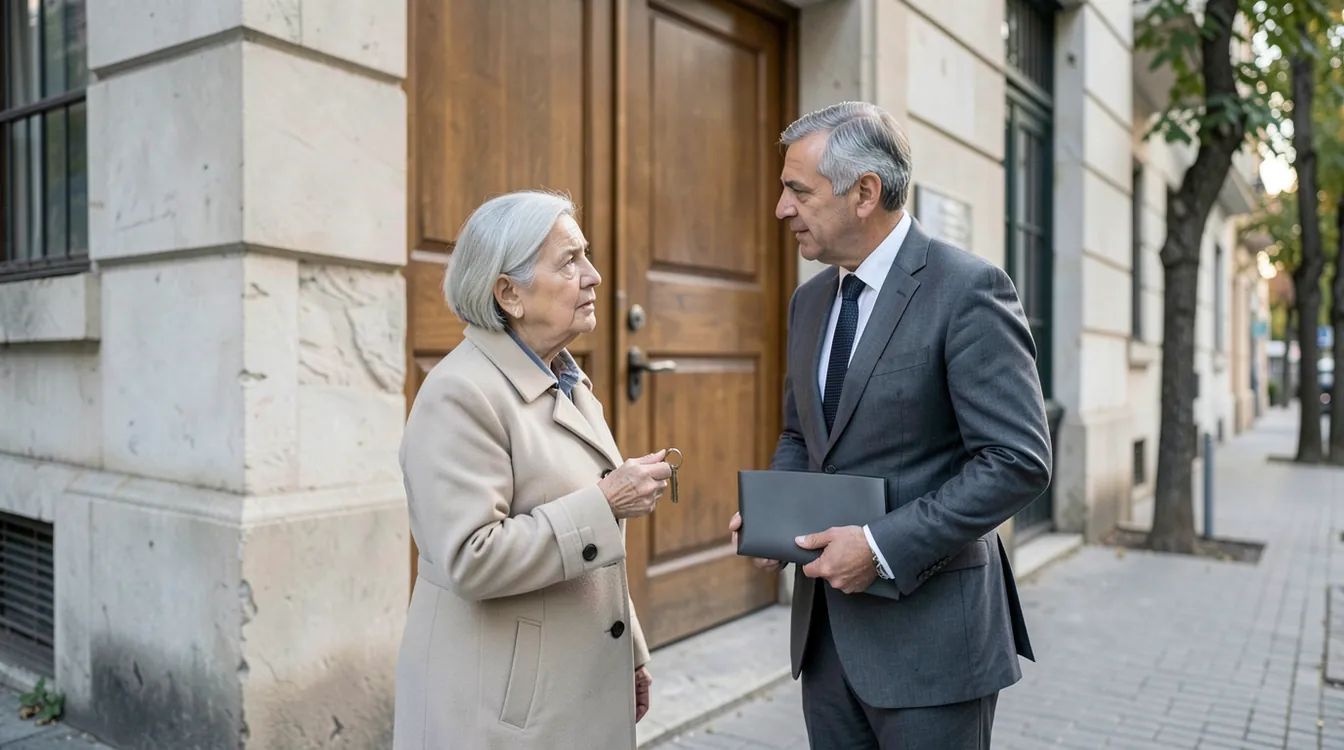
Owners who live abroad may not learn of the transfer from an official notice. A tenant says a new owner has asked for the rent, an estate agent calls about a listing the owner never authorised, or a lawyer checking the title for a sale or an inheritance finds another name in the ownership column. Owners with access to the Turkish e-Government portal (e-Devlet) can see their registered properties online; others ask a lawyer in Türkiye for a current extract of the register.
The next step is to see how the transfer was made. Under Article 1020 of the Turkish Civil Code (Türk Medeni Kanunu, TMK) No. 4721, anyone who makes an interest credible may ask to see the relevant page of the land register and the related documents before the land registry officer, or to receive copies. For a defrauded owner the key documents are the official deed of sale and the power of attorney the representative presented: they show who appeared, which notary supposedly drew up the document and when.
The same Article adds that no one can claim not to know an entry in the land register. That rule works against the owner while the register shows someone else, and for the owner once a protective annotation is entered (section 5). Until then, avoid confronting the occupants or negotiating with the new registered owner, and keep every document and message.
2. Why a Transfer on a Forged Power of Attorney Is an Unlawful Registration (TMK 1024)
Article 705 of the Civil Code states that ownership of immovable property is acquired by registration. A registration still needs a valid basis. Under the second paragraph of Article 1024, a registration that rests on a legal transaction that is not binding, or that is without a legal cause (hukukî sebepten yoksun), is unlawful (yolsuz).
A sale made by a person holding a forged power of attorney fits that description. The owner never agreed to sell and never authorised anyone to sell; the person who signed could not bind the owner, so the registration in the buyer's name rests on a transaction that does not bind the owner. Whether the document is in fact forged is a question of evidence for the court, which may be decided with the help of expert examination of the signature, the records of the notary named on it and proof of where the owner was that day.
Article 1024 adds two rules. A third party who knew or should have known that a real right was registered unlawfully cannot rely on that registration (first paragraph), and the person whose real right was harmed may assert the unlawfulness directly against third parties who are not in good faith (third paragraph).
An unlawful registration does not correct itself. Under Article 1027, unless the interested parties consent in writing, the land registry officer may correct an error in the register only on a court decision, and the correction may take the form of cancelling the old registration and making a new one. Hence the name used in practice: the action for title deed cancellation and registration (tapu iptali ve tescil).
A forged transfer can raise more than one question at once: the property itself, rent collected by someone else, an inheritance that included the flat. Use our claim check to see which kinds of claim Turkish law recognises in your situation before you speak to a lawyer.
Open Claim Check →3. The Action to Correct the Register: Title Deed Cancellation and Registration (TMK 1025, 1027)
Article 1025 gives the owner the claim: where a real right has been registered unlawfully, the person whose real right is harmed may sue for correction of the land register. The owner asks the court to cancel the registration in the name of the person now shown as owner and to register the property again in the owner's name. If the property has changed hands more than once, each later registration standing between the owner and the property has to be addressed.
The case is proved with documents and expert evidence. The file may include:
- The registry file of the transfer: the deed of sale and the power of attorney presented at the land registry.
- Passport and travel records for the date the power of attorney was supposedly signed.
- Specimens of your genuine signature from the period, for expert comparison.
- A statement from the notary office named on the document on whether it issued it.
- Your own title documents, with any lease and rent records.
- Messages and reports from the tenant, neighbours or agents who first noticed the transfer.
The owner does not have to travel to start the action. A lawyer files it on a power of attorney that an owner abroad can sign at a Turkish consulate or before a local notary with an apostille; given how the problem began, keep that original safe.
The second paragraph of Article 1025 sets the limit: the real rights that third parties in good faith acquired by relying on the registration, and every kind of compensation claim, are reserved. The first half is the main risk in these cases; the second half is where the claims against the State and against those behind the fraud come from.
4. The Good-Faith Buyer Problem (TMK 1023 and 1024)
A fraud of this kind need not stop at one sale. A quick transfer to a first buyer may be followed by a resale to a family or company that pays a price and moves in. Here the register works against the original owner: under Article 1023, a third party who acquires ownership or another real right by relying in good faith on the registration in the land register is protected in that acquisition. A later buyer who purchased from the person the register already showed as owner is the typical case.
The protection is not unconditional. Article 1024 withholds it from a third party who knew or should have known that the registration was unlawful. The dispute therefore turns on the facts of each acquisition: the relationship between the people involved, the price compared with the value of the property, how quickly the resales followed each other and what the buyer saw or was told about the occupants.
The person who dealt directly with the false representative stands differently from a later buyer, because they relied on a document presented in the owner's name rather than on a register showing the seller as owner. How far Article 1023 can be invoked at that first step is a legal question the court answers on the facts; it should not be assumed either way.
The practical conclusion: every further transfer to a buyer who can claim good faith adds a defendant and an obstacle, and may close the way back. The first legal step after discovery should be the one that stops the register from moving.
5. Freezing the Title: Interim Measure and Annotation (HMK 389-397, TMK 1010)
The tool is an interim measure (ihtiyati tedbir) under the Code of Civil Procedure (Hukuk Muhakemeleri Kanunu, HMK) No. 6100. Article 389 allows it where a change in the existing situation is feared to make obtaining the right considerably more difficult or entirely impossible, or where delay would cause a drawback or serious harm. A further sale to a buyer who may claim good faith is exactly such a change.
Under Article 390, the measure is requested before the lawsuit from the court competent to hear the merits, and afterwards only from the court hearing the main case; where immediate protection is necessary, the judge may decide without hearing the other side. The applicant must state the reason and type of the measure clearly and give approximate proof (yaklaşık ispat) of being right on the merits. Article 391 lets the court order any measure that prevents the harm, including an order that something must not be done; here the request would be that the property must not be transferred or encumbered.
Article 392 requires the applicant to give security for the losses the other side and third parties may suffer if the applicant turns out to be wrong, although the court may, stating its reasons, dispense with security where the request rests on an official document or other conclusive evidence, or the circumstances require. The other side may object to a measure granted without hearing it, within the period in Article 394. If the measure is granted before the lawsuit, Article 397 requires the main action to be filed within two weeks of the date the applicant asked for its implementation, with proof placed in the file; otherwise the measure lapses automatically.
At the registry, the measure works through an annotation (şerh). Article 1010 of the Civil Code allows restrictions on the power of disposal resting on court decisions for the protection of disputed rights to be annotated in the land register; once annotated, they can be asserted against those who later acquire rights in the property. Together with Article 1020, the annotation undermines the argument that a later buyer relied on the register in good faith.

6. When the Property Cannot Come Back: The State's Liability for the Land Registry (TMK 1007)
Sometimes the way back is closed: a buyer who acquired in good faith on the strength of the register keeps the property under Article 1023, and Article 1025 reserves that acquisition. The question then becomes who pays for the loss.
Article 1007 of the Civil Code answers in three sentences. The State is liable for all losses arising from the keeping of the land register (tapu sicilinin tutulmasından doğan bütün zararlar). The State has recourse against the officials at fault in causing the loss. Actions concerning the State's liability are heard by the court of the place where the land register is kept. The wording places fault in the State's recourse against its officials, not in the claim of the person who suffered the loss.
Whether a particular transfer on a forged power of attorney is a loss arising from the keeping of the register is for the court to decide on the facts, and the amount may need to be established with expert evidence on the value of the property. The registry file, the forgery evidence and the proof of the good-faith acquisition that defeated the correction action are central to the claim.
Article 1007 itself does not state a period within which the claim must be brought, and this guide does not state one; the applicable time limit should be checked for the specific file at the start. Because Article 1025 reserves every kind of compensation claim, the owner may also have claims against those who organised or profited from the fraud, worth pursuing where they can be identified and have assets.
7. The Criminal Complaint and the Power of Attorney Itself
A power of attorney the owner never signed points to forgery and fraud. The owner, directly or through a lawyer, can file a criminal complaint with the public prosecutor on that suspicion. The investigation can establish who appeared at the notary and at the registry, and its expert reports can become useful evidence in the civil action.
The criminal file does not put the owner's name back on the register; only a court decision in the civil action, or the written consent of the interested parties, does that (TMK Article 1027). The two proceedings should run in parallel, with the civil side starting from the interim measure. If the document bears the name of a real notary office or consulate, the lawyer asks that office whether it issued it at all; whether any office bears responsibility is a separate question that depends on how the document came to exist, and is not covered here.
8. The Two Civil Routes Compared and a Checklist for Owners Abroad
The two routes are not competitors. The correction action is the primary remedy because it returns the property itself; the claim against the State is the route for the loss that remains where a protected acquisition closes the way back. Which to start first, or whether to pursue them together, is a procedural decision for the particular file.
| Question | Recover the property (TMK 1025) | Claim from the State (TMK 1007) |
|---|---|---|
| Legal basis | TMK Articles 1024 and 1025 (correction of the register; TMK 1027 on how it is carried out) | TMK Article 1007 (liability for the keeping of the land register) |
| What you ask for | Cancellation of the unlawful registration and registration of the property back in your name | Compensation for the loss arising from the keeping of the land register |
| Against whom | The person or persons now registered as owner | The State, which has recourse against officials at fault |
| Court | The competent civil court | The court of the place where the land register is kept (Art. 1007) |
| Effect of a good-faith buyer | The buyer's acquisition in reliance on the register is protected (TMK 1023, 1025) | The typical reason this route is used |
| Buyer who knew or should have known | Cannot rely on the unlawful registration (TMK 1024) | Correction remains available against that buyer |
| Protective first step | Interim measure and annotation (HMK 389-397, TMK 1010) | Securing the registry file and the value evidence |
| Result | The property returns to your name | A sum of money |
Checklist for an owner who lives abroad
- Check your title regularly, online if you have e-Devlet access or through a lawyer's extract of the register, and not only when you plan to sell.
- Do not leave originals of powers of attorney with agents, developers or acquaintances, and limit any power you give to the task it is for.
- Revoke old powers of attorney you no longer need, at a notary or a Turkish consulate, and keep proof of the revocation.
- Keep your travel records: passport stamps, tickets and boarding passes show where you were on any disputed date.
- On discovery, obtain the registry file of the transfer and do not negotiate with the occupants or the new registered owner.
- Apply for an interim measure prohibiting transfer and have it annotated on the title; if it is granted before the lawsuit, file the main action within two weeks of asking for its implementation (HMK Article 397).
- File the correction action and a criminal complaint on suspicion of forgery and fraud.
- If a good-faith buyer is protected, assess the claim against the State under TMK Article 1007 and have the applicable time limit checked at the outset.
A forged power of attorney does not make the buyer the lawful owner, but the register protects those who rely on it in good faith. The owner's part is to obtain the registry file, freeze the title with an interim measure and annotation, bring the correction action with the forgery evidence and, where a protected acquisition closes the way back, turn to the State's liability for the keeping of the land register.
Scope. This page describes the Turkish rules as in force in September 2026: Articles 705, 1007, 1010, 1020, 1023, 1024, 1025 and 1027 of the Turkish Civil Code No. 4721 and Articles 389 to 394 and 397 of the Code of Civil Procedure No. 6100. It is general information, not advice on a particular case; which court is competent, the time limits, the costs and the outcome depend on the facts, the documents and the court's assessment.
Frequently Asked Questions
Someone sold my Turkish flat with a forged power of attorney. Is the sale valid?
A registration that rests on a legal transaction that is not binding, or that lacks a legal cause, is unlawful under Article 1024 of the Turkish Civil Code. A sale signed by a person who had no authority from you does not bind you, so the registration in the buyer's name is unlawful. The court decides whether the document is forged, which may involve expert evidence and proof of where you were on the date it was supposedly signed.
Can the land registry simply reverse the transfer when I show it is forged?
No. Under Article 1027, unless the interested parties consent in writing, the land registry officer can correct an error in the register only on a court decision. That is why you need the action to correct the register (Article 1025), known in practice as title deed cancellation and registration.
The flat has already been resold to a family who paid for it. Can I still get it back?
It depends on their good faith. Article 1023 protects a third party who acquires ownership by relying in good faith on the register. Article 1024 withholds that protection from anyone who knew or should have known that the registration was unlawful. The court examines each acquisition separately.
How do I stop the flat being sold again while the case runs?
Ask the court for an interim measure under Articles 389 to 392 of the Code of Civil Procedure, such as an order that the property must not be transferred or encumbered, supported by approximate proof and, as a rule, security. The decision is annotated on the title under Article 1010 of the Civil Code and can then be asserted against later acquirers. If it is granted before the lawsuit, the main action must be filed within two weeks of asking for its implementation (Article 397).
If I cannot get the property back, who pays for my loss?
Article 1007 of the Civil Code makes the State liable for all losses arising from the keeping of the land register, with recourse against officials at fault; the claim is heard by the court of the place where the register is kept. Whether your loss arises from the keeping of the register is decided on the facts. Claims against those responsible for the fraud are also reserved (Article 1025).
Is there a deadline for the claim against the State?
Article 1007 itself does not state a period, and we do not state one here. The applicable time limit should be checked for your specific file at the start, before deciding which route to pursue first.
Do I have to come to Türkiye to deal with this?
Not to start the proceedings. A lawyer in Türkiye can obtain the registry file, apply for the interim measure, file the civil action and the criminal complaint on the basis of a power of attorney you sign at a Turkish consulate or before a notary abroad with an apostille. The court may still ask for your statement or original documents in the course of the case.
Talk to someone about a property transferred without your consent
Send us the property's location and title details, what you have learned about the transfer and when, and any documents or messages you have. We will tell you what the register is likely to show, which routes are open in your case and what the first step is.