Part of our Core Hub on Personal Injury in Türkiye: This sub-dive examines liability for accidents at hotels, resorts and on booked excursions. For the wider framework of bodily injury claims, medical costs and loss of earnings, see our main pillar: Personal Injury Compensation in Türkiye: Complete Claims Guide.
1. What a Turkish hotel accident claim actually turns on
Guests injured in Antalya, Bodrum, Marmaris, Kusadasi or Side usually frame the problem as a question of blame: was the hotel careless? Turkish law asks a narrower and far more consequential question first, namely which liability rule the facts engage. That choice determines what the claimant must prove, what the defendant is permitted to prove in answer, and how many solvent parties stand behind any eventual judgment.
Three routes normally run in parallel on the same facts:
- Contract. The accommodation booking is a contract. The hotel owes the guest more than a bed and a buffet; safety of the premises and of the services sold with the room is part of what was paid for. Breach of that protective obligation sounds in contractual liability.
- Ordinary fault liability in tort. The general fault rule of the Turkish Code of Obligations (Law No. 6098, referred to here as TBK) covers unlawful and culpable conduct that causes damage.
- Employer, enterprise and danger liability. TBK Article 66 and TBK Article 71 are the provisions that decide most serious resort claims, because they attach liability without requiring the claimant to identify personal fault on the part of the owner.
The recoverable heads of damage are broadly familiar to a foreign reader: medical treatment and rehabilitation costs, expenses caused by the accident, loss of earning capacity where an injury is permanent, and non-pecuniary damages for pain and suffering. Where a guest dies, close relatives may claim in their own right, both for the loss of financial support and for their own non-pecuniary loss. A claim pleaded only as the hotel was negligent invites a defence built entirely around one employee's momentary lapse. A claim pleaded on the enterprise footing forces the hotel to defend its whole operating system.
2. TBK 66 and TBK 71: the two liability engines, and why the difference decides cases
TBK 66 begins conventionally. Its first paragraph makes a person who employs another liable for damage the employee causes in the course of performing the work assigned to him. Its second paragraph then hands the employer an escape route: no liability if he proves that he exercised the care required to prevent the damage when selecting the employee, when giving instructions relating to the work, and when supervising and inspecting. Large hotels are well equipped to run that defence. They produce recruitment files, certificates, training signatures and a supervisor's checklist, and argue that the organisation did everything expected of it while one lifeguard or one waiter fell short.
The third paragraph of TBK 66 changes the terrain completely. A person who employs others in an enterprise is liable for damage caused by the activities of that enterprise unless he proves that the operating organisation of the enterprise was suitable to prevent the damage from arising. The enquiry stops being about one employee and becomes about the system: rotas, staffing levels, inspection cycles, maintenance records, the interface between the hotel and its subcontractors, the way hazards are reported and closed out. This is a materially harder defence, because the accident itself is usually evidence that the organisation had a gap.
TBK 71 goes further still. Where damage arises from the activity of an enterprise presenting a significant degree of danger, the owner and, if there is one, the operator are jointly and severally liable. There is no exculpation by proving care. The statutory test is whether, given the nature of the enterprise or the materials, tools or forces used in its activity, it is apt to cause frequent or serious damage even where all the care expected of an expert is exercised. TBK 71 also states expressly that even where the legal order has permitted the activity, those who suffer damage may still claim, and that special danger-liability provisions laid down elsewhere are reserved.
| Feature | TBK 66, paragraphs 1 and 2 (employer for employee) | TBK 66, paragraph 3 (enterprise activity) | TBK 71 (significant degree of danger) |
|---|---|---|---|
| Basis of liability | Attaches to the employment relationship for damage the employee causes while performing assigned work; no personal fault of the employer required | Attaches to the activities of the enterprise as such, independently of which individual erred | Strict liability arising from the dangerous activity itself |
| Available defence | Proof of due care in selection of the employee, in work-related instructions, and in supervision and inspection | Proof that the operating organisation of the enterprise was suitable to prevent the damage from arising | None by way of proving care; permission to carry on the activity is not a defence |
| Who is liable | The employer, with recourse against the employee only to the extent the employee is personally liable | The person who employs others in the enterprise | Owner of the enterprise and the operator, jointly and severally |
| Typical resort scenario | A driver, waiter, animation staff member or technician injures a guest while doing the job | Unsupervised pool periods, unrepaired balustrade, no cold-chain control in the kitchen, no handover between contractors | Activities argued to be apt to cause frequent or serious damage despite expert care, assessed against the statutory test |
Whether a particular resort operation crosses the TBK 71 threshold is a legal characterisation decided on the evidence, and not every hotel installation qualifies. A well-advised claimant therefore pleads TBK 66 paragraph 3 as the reliable backbone and advances TBK 71 where the forces and materials involved genuinely support it.
3. Pools, waterslides and aquapark installations
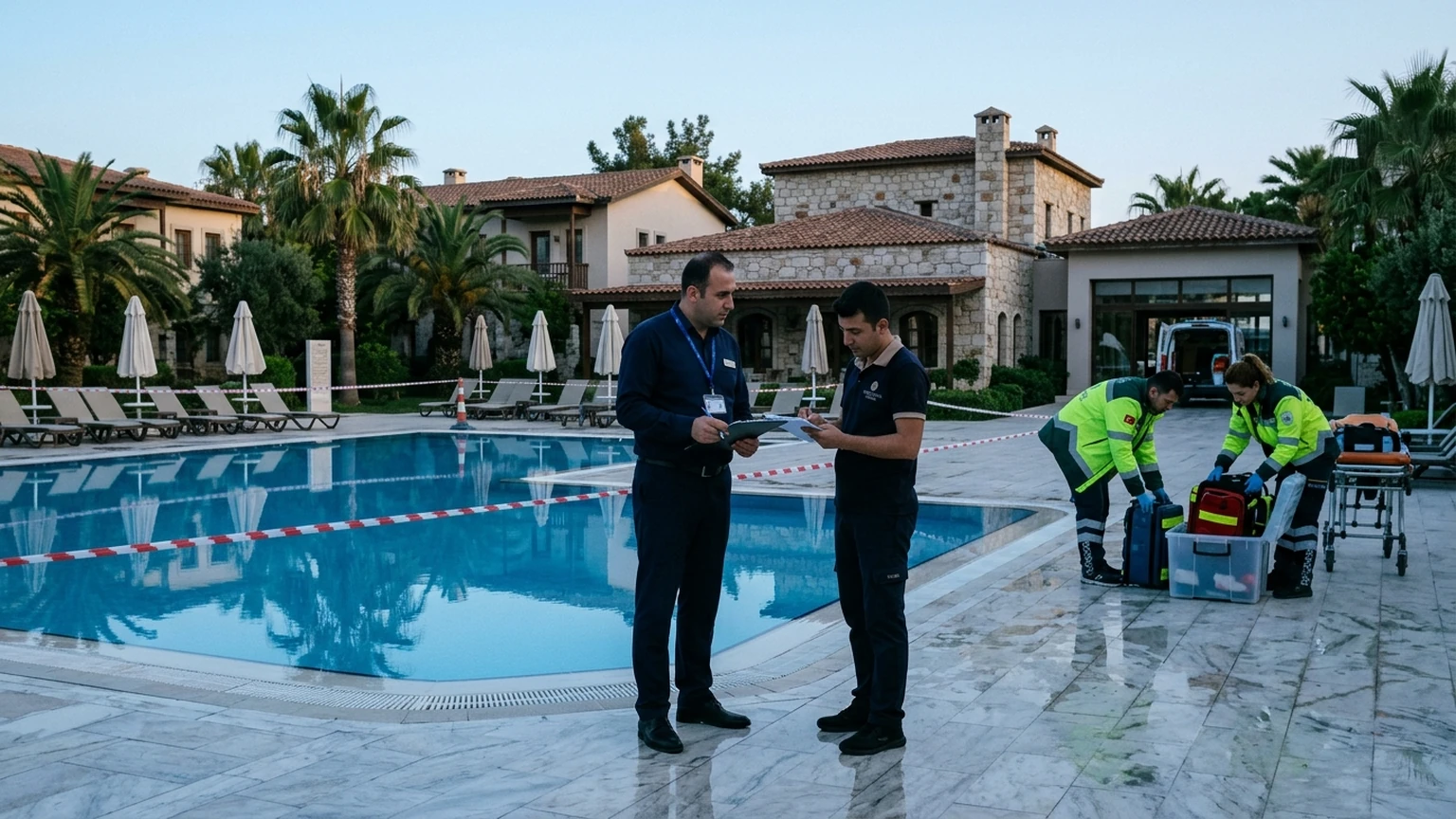
Pool cases are the most common serious resort claims, and the most commonly under-pleaded. The recurring fact patterns are a child drowning or near-drowning during a period when no lifeguard was on duty, a head or spinal injury from entry into water shallower than the guest expected, an ejection or collision on a waterslide run-out, an entrapment injury at a defective suction outlet or drain cover, a laceration from broken tiling or glass carried into the pool area, and chemical injury from mishandled dosing equipment.
The instinctive claim is that a lifeguard was absent. That framing plays directly into the TBK 66 paragraph 2 defence. The stronger framing asks what the enterprise's operating organisation looked like:
- Was there a written supervision rota, and did it cover the hours the pool was open to guests?
- Were depth markings, slide-height restrictions and prohibition signs present, legible, and in languages the resort's actual guests read?
- Was night access to the pool physically prevented, or merely discouraged by a sign?
- Were water-quality and chemical-dosing checks logged, and by whom?
- Was there a documented inspection cycle for slides, ladders, gratings and outlet covers, and a record of defects being closed out?
Every one of those questions goes to whether the operating organisation was suitable to prevent the damage from arising. Where the installation is a substantial aquapark with pumped water flow, height and speed, a claimant may additionally argue the TBK 71 characterisation, pointing to the forces used in the activity. Expect a contributory-conduct argument in reply: alcohol consumption, diving head-first, ignoring a marked prohibition, or leaving a child unattended. Be precise about how far that argument can go. Under TBK Article 52 the judge may reduce the compensation or remove it entirely where the injured party consented to the act causing the harm, contributed to its occurrence or aggravation, or aggravated the position of the person liable. Contributory conduct is therefore not merely a discount: on strong facts it can defeat the claim. What limits its force in practice is evidence that the organisation itself was inadequate, because that failure is the defendant's own and is measured separately from the claimant's conduct.
4. Balcony falls, stairways, wet floors and lighting
Falls inside the building generate the most severe long-term disability claims after pool accidents, and they are the cases where physical evidence disappears fastest. Typical causes are balustrades that are too low or too widely spaced for the guests actually accommodated, furniture positioned so that a small child can climb a balcony rail, unlit or badly lit stair nosings, a single unmarked step in a corridor, polished stone that becomes treacherous when wet, missing or discontinuous handrails, unmarked glass panels, water tracked into a marble lobby during rain, and lifts that stop out of level with the floor.
Two features of Turkish law matter here. First, the enterprise limb of TBK 66 fits these facts naturally, because the defect is almost always organisational rather than personal: nobody scheduled the inspection, nobody logged the guest's earlier complaint, nobody warned housekeeping to place a sign after mopping. Second, the Turkish Code of Obligations separately places liability on the owner of a building or other structure for damage caused by defects in its construction or by inadequate maintenance. That route is commonly pleaded alongside the enterprise claim, because it targets the owner of the premises even where the operating company is a different legal entity.
Practical consequence for the claimant: photograph the exact defect before the hotel repairs it. Loose balustrade fixings are tightened, missing bulbs are replaced and warning cones appear within hours of a serious fall. Photographs taken from the guest's approach direction, showing lighting conditions and the absence of any warning, are worth more later than any witness recollection of them.
5. Food poisoning at all-inclusive resorts
Gastrointestinal illness after an all-inclusive stay is a claim about causation before it is a claim about liability. The hotel's standard answer is that the guest ate somewhere else, drank tap water, or caught a virus circulating independently of the buffet. Beating that answer requires evidence gathered while the guest is still ill.
What actually moves a food poisoning claim forward:
- A stool sample taken and laboratory-tested, ideally in Türkiye while symptoms are active, identifying the pathogen rather than recording only a clinical impression.
- The hotel doctor's or clinic's contemporaneous record, with the date and the guest's account of what was eaten and when.
- Evidence that other guests were affected in the same window: names and contact details, the tour representative's illness log, and complaint entries at reception.
- Photographs of the buffet service showing uncovered dishes, food held outside temperature control, reheated items, or shellfish and dairy on an unrefrigerated line.
- Any inspection or public health involvement at the property during or shortly after the stay.
On liability, TBK 66 paragraph 3 is the natural home for the claim. The relevant question is not whether one cook was careless but whether the kitchen's operating organisation was suitable to prevent the damage: supplier controls, cold-chain records, separation of raw and cooked preparation, staff health screening, cleaning schedules, potable water supply, and the discipline applied to leftovers. A hotel that cannot produce those records is in a weak position, because the burden of showing the organisation was suitable sits on it, not on the sick guest.
6. Quad and jeep safaris, boat trips and other booked excursions
Excursions produce the most serious injuries and the messiest liability picture. The recurring patterns are a quad or buggy rollover on an unsealed track, a collision in a convoy travelling in the dust cloud of the vehicle ahead, a jeep safari overturning on a hillside road, a fall or crush injury on a gulet or day-trip boat, propeller and towed-inflatable injuries, and diving or parasailing incidents.
Three legal features matter. First, motorised excursions engage the strongest TBK 71 arguments available in the tourism context, because the statutory test looks to the materials, tools or forces used and asks whether the activity is apt to cause frequent or serious damage even where expert care is exercised. Convoys of high-powered off-road vehicles ridden by untrained holidaymakers are a serious candidate. Second, TBK 71 expressly reserves special danger-liability provisions laid down for particular situations of danger, and Turkish highway traffic legislation contains its own liability regime for the operator of a motor vehicle. Where the excursion vehicle is a road vehicle, that regime and its associated compulsory motor insurance may give the claimant a directly insured defendant. Third, if TBK 71 applies, the owner of the enterprise and the operator are jointly and severally liable, so the claimant is not required to work out which of them controlled the guide on the day.
The waiver signed at the departure point is not the obstacle guests assume. A pre-printed form in a language the guest does not read, signed minutes before departure, is weak evidence of informed consent, and Turkish law does not allow a business to contract out of liability for grossly careless conduct in the way such forms usually assume. Keep the form; it identifies the operator.
7. Hotel, tour operator or excursion provider: choosing defendants that can actually be reached
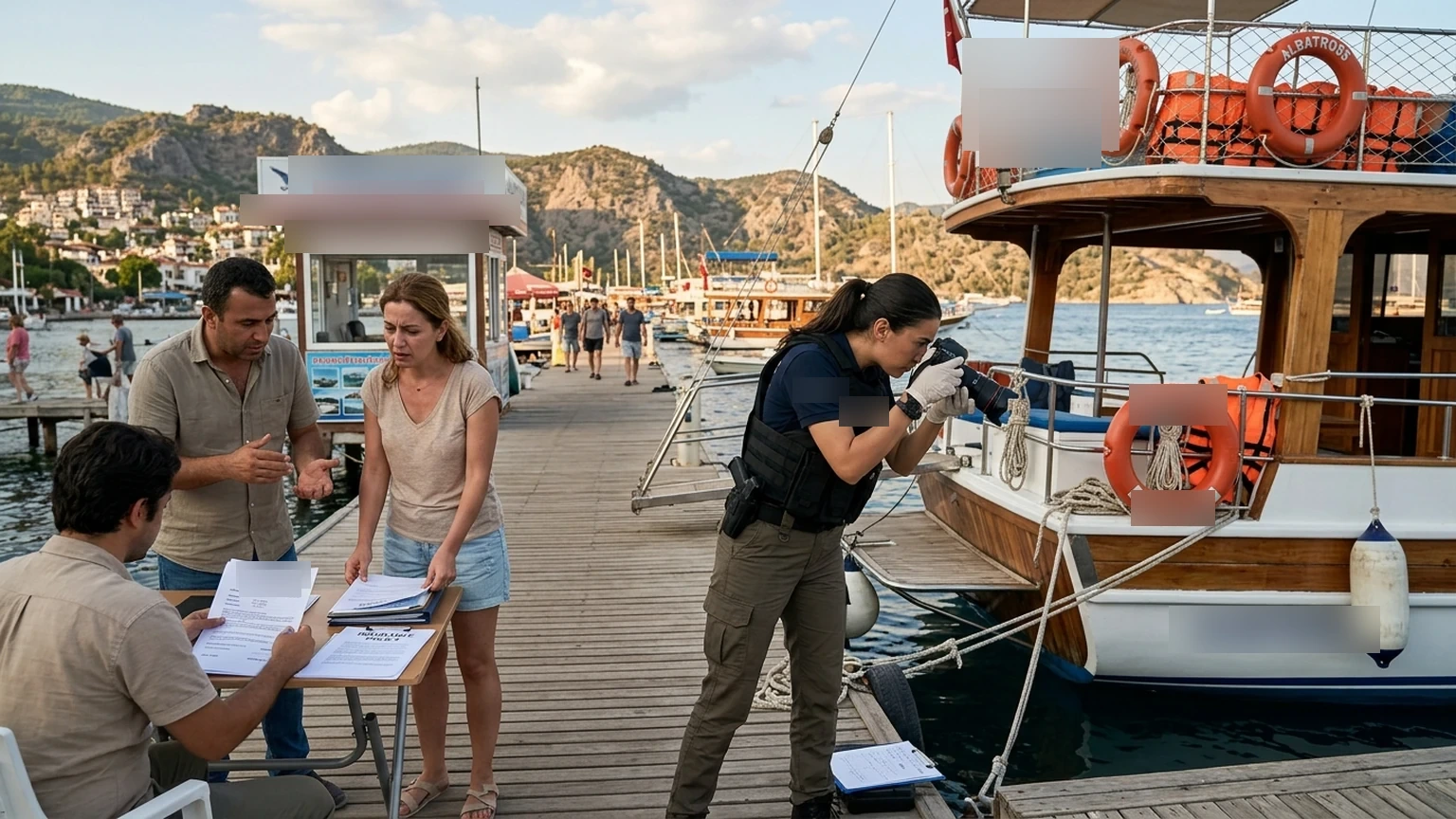
A package holidaymaker typically stands inside three or four separate legal relationships at the moment of the accident, and the identity of the correct defendant is rarely obvious from the guest's point of view.
- The tour operator in the guest's home country. The package contract was made there, and most European legal systems make the organiser answerable for the proper performance of the services included in the package, including the hotel and excursions sold as part of it. This route is convenient because the operator is local to the claimant, but it is limited to what the package covered and to the compensation regime of that country.
- The hotel or resort operating company in Türkiye. This is the defendant against which TBK 66 and TBK 71 operate directly, sued at its place of business in Türkiye, with assets and liability insurance inside the jurisdiction.
- The owner of the premises, where the property is owned by one company and operated by another.
- The excursion provider. Sometimes a genuinely independent business; sometimes an auxiliary the hotel presents as its own service. The paperwork decides which, and the paperwork is usually the receipt.
Joint and several liability is the feature that changes a foreign claimant's practical position. Where it applies, the injured party may pursue any liable party for the whole of the damage, and it is for the defendants to sort out their internal shares afterwards. TBK 71 states this expressly for the owner and the operator of a dangerous enterprise, and TBK Article 66/4 caps the employer's right of recourse against the employee at the extent of the employee's personal liability. Note what that provision does and does not say: it governs recourse between employer and employee, not apportionment among several defendants. The proposition that a claimant may recover in full from one defendant and leave apportionment to them rests on the joint and several liability imposed by Article 71, not on Article 66/4.
Why this matters: a family in Germany or the United Kingdom cannot realistically enforce a judgment against a small quad-hire business in a coastal village, and cannot easily sue a Turkish hotel company from home. Solidarity helps here, but be exact about its reach. TBK Article 71 makes the owner and the operator of the dangerous enterprise jointly and severally liable — in the quad-safari example that is the owner and the operator of the quad-hire business, not the hotel. A hotel is not made solidarily liable for a third party's enterprise merely by selling the excursion. The hotel is reached on its own footing: under TBK Article 66/3, for damage caused by the activities of its own enterprise, where it cannot prove that its operating organisation was suitable to prevent the damage — which is where the selection, supervision and integration of the excursion into the hotel's own offering does the work.
8. The evidence to secure before you fly home
Almost every weak resort claim is weak for the same reason: the guest was treated, flew home, and only sought advice after the scene had been repaired and the staff had rotated. The following should be gathered while still in Türkiye, and copies kept independently of the hotel and the tour representative.
- The incident report. Ask reception to record the accident in writing, read what has been written before signing, and insist on a stamped copy. If the hotel refuses, send the same account by email to the hotel and to the tour representative so that a dated record exists.
- Medical records. The hotel doctor's note, ambulance record, hospital admission and discharge papers, imaging and radiology reports, and any surgical note. Turkish hospitals will provide copies to the patient.
- Photographs and video of the scene. The defect itself, the surroundings, the lighting, the signage present or absent, and a wide shot showing where the defect sits relative to the guest's route.
- Witnesses. Names, nationality, home addresses, telephone numbers and email addresses of other guests and, where possible, of staff. Other guests scatter across Europe within days.
- A written request to preserve CCTV. Recordings are commonly overwritten on a rolling cycle. A dated written request creates both the evidence and the inference if the footage later disappears.
- The booking chain. Booking confirmation, invoice, voucher, room allocation, board basis, the excursion receipt or ticket, the wristband, the waiver form, the name and company of the guide, the vehicle or boat registration, and the name of the tour representative.
- Official records. Police or gendarmerie report where one was made, and the prosecutor's file reference where a criminal investigation into the incident has been opened.
For permanent injuries, a Turkish forensic medical assessment of the degree of lasting impairment will usually be needed at a later stage, but it is built on the clinical records created at the time. Incomplete early records limit what any later report can conclude.
Calculate Statutory Interest on a Turkish Compensation Award
In tort, interest on damages runs from the date of the harmful act, and the court cannot award more than the petition asks for — so the prayer for relief has to claim it correctly from the outset. Use our interactive tool to model the interest component of a personal injury claim:
Open the statutory interest calculator →9. Running the claim from abroad: jurisdiction, representation and timing
Foreign claimants regularly assume that pursuing a Turkish defendant means repeated travel to Türkiye. In practice it does not. A claim is normally brought against the hotel or excursion company before the Turkish court for its place of business, and the claimant is represented by a Turkish lawyer acting under a power of attorney granted at home before a notary and legalised for use in Türkiye, most commonly by apostille. The client's personal attendance at hearings is the exception rather than the rule.
Applicable law follows the ordinary private international law principle that a tort is governed by the law of the place where the harmful act occurred, which for a resort accident in Türkiye means Turkish law, including TBK 66 and TBK 71. Documents generated abroad, such as hospital records, occupational health reports and payslips evidencing loss of earnings, are used with sworn Turkish translations. Quantum in serious cases is typically established through a court-appointed expert examination and a medical assessment of permanent impairment.
Three practical points close the picture. First, identify insurance early: the hotel's liability cover, and any compulsory insurance attaching to a motor vehicle or maritime operation involved in the accident, often determine whether a judgment is worth obtaining. Second, a parallel claim against the tour operator at home and a claim against the Turkish enterprise are not mutually exclusive, but recoveries must be coordinated so the same loss is not paid twice. Third, claims in Türkiye are subject to limitation periods, and where the same conduct also constitutes a criminal offence a longer period may apply. Because the applicable period depends on the legal basis pleaded and on the facts, take advice on it promptly rather than assuming the position is the same as at home.
Scope. This page is general information about Turkish law and procedure. It is not legal advice, it is not an assessment of your situation, and reading it does not create a lawyer-client relationship. Statutory figures, thresholds and rates are revised periodically — check the current position before relying on any of them. Any particular case turns on its own documents and facts.
Frequently Asked Questions
I booked the holiday through a tour operator in my own country. Can I still claim against the Turkish hotel?
Yes. The package contract with your operator and the tort claim against the Turkish hotel are separate legal relationships arising from the same accident. Most European travellers have a route against the organiser at home for defective performance of the package, and an independent claim in Türkiye against the hotel or resort company under the Turkish Code of Obligations. Which route produces more depends on the severity of the injury, the compensation levels available, and whether the defendant is insured. The two claims must be coordinated so that the same loss is not recovered twice.
What is the practical difference between TBK 66 and TBK 71 for my claim?
Under TBK 66 the employer can escape liability by proving that it exercised the required care in selecting the employee, instructing him and supervising his work. Its third paragraph is harder for the defendant, because liability for damage caused by the enterprise's activities falls away only if the operator proves the enterprise's operating organisation was suitable to prevent the damage from arising. TBK 71 is stricter still: for an enterprise presenting a significant degree of danger there is no escape by proving care, and the owner and the operator are jointly and severally liable.
I signed a waiver before the quad safari. Does that end my claim?
Rarely. A pre-printed disclaimer handed over minutes before departure, often in a language the guest cannot read, is weak evidence that the guest genuinely accepted a specific risk. Turkish law does not permit a business to exclude liability for grossly careless conduct through such forms, and where a strict danger-liability regime applies, the fact that the activity was legally permitted does not defeat a claim. Keep the waiver regardless: it usually identifies the operating company, the vehicle and the guide, which is exactly the information you will need.
The hotel refuses to give me a copy of the incident report. What should I do?
Create your own dated record immediately. Send an email the same day to the hotel's reservations or management address and to your tour representative, setting out the date, time, precise location, what happened, who was present and what injuries were sustained, and ask them to confirm receipt and to preserve any CCTV covering that area. Photograph the scene before repairs. A contemporaneous written account sent to the defendant, combined with medical records from the same day, is often as persuasive as the hotel's own form.
An independent company ran the boat trip the hotel sold me. Who is liable?
That depends on how the excursion was actually organised and sold, which the paperwork usually reveals. If the excursion was presented and sold as part of the hotel's own service offering and its staff arranged it, the hotel is exposed on the enterprise footing. If the operator is genuinely independent, it is liable in its own right, and where the activity meets the statutory danger test its owner and operator are jointly and severally liable. Keep the receipt, ticket, wristband and the name of the guide and the vessel.
I had been drinking, or ignored a warning sign. Does that destroy the claim?
Not necessarily, but it can do more than reduce the award. Under TBK Article 52 the judge may reduce the compensation or remove it entirely where the injured party consented to the harmful act, contributed to the occurrence or increase of the damage, or aggravated the position of the person liable. A defendant will always plead it. What limits its force is evidence that the organisation itself was inadequate — an unsupervised pool, an unlit stairway, a briefing never given — because that failure is assessed against the defendant separately from your own conduct.
My relative died in an accident at a Turkish resort. What can the family claim?
Close relatives have claims in their own right, not merely as heirs. These typically include funeral and related expenses, compensation for the loss of financial support that the deceased provided to those who depended on it, and non-pecuniary damages for the family's own grief and suffering. Where the accident engages the enterprise or danger provisions, the same liability analysis applies and the defendants may be jointly and severally liable. Fatal cases frequently run alongside a criminal investigation, whose file can become an important source of evidence for the civil claim.