Part of our Core Hub on Insurance Claims in Türkiye: This guide covers earthquake damage to a home and the compulsory earthquake insurance claim against DASK: what the policy covers and excludes, the notice duty, assessment and payment, what can reduce or remove the payment, and how to dispute the decision. For the broader framework of denied and underpaid insurance claims, see our main pillar: Insurance Claim Disputes in Türkiye: The Foreign Policyholder's Guide.
An earthquake claim runs on short notice periods and a fixed limitation clause. Use our time-limit check for a first orientation on the rules Turkish law applies to denied or underpaid insurance claims, then read section 7 for the two-year clause in the compulsory earthquake insurance General Conditions.
Open Time-Limit Check →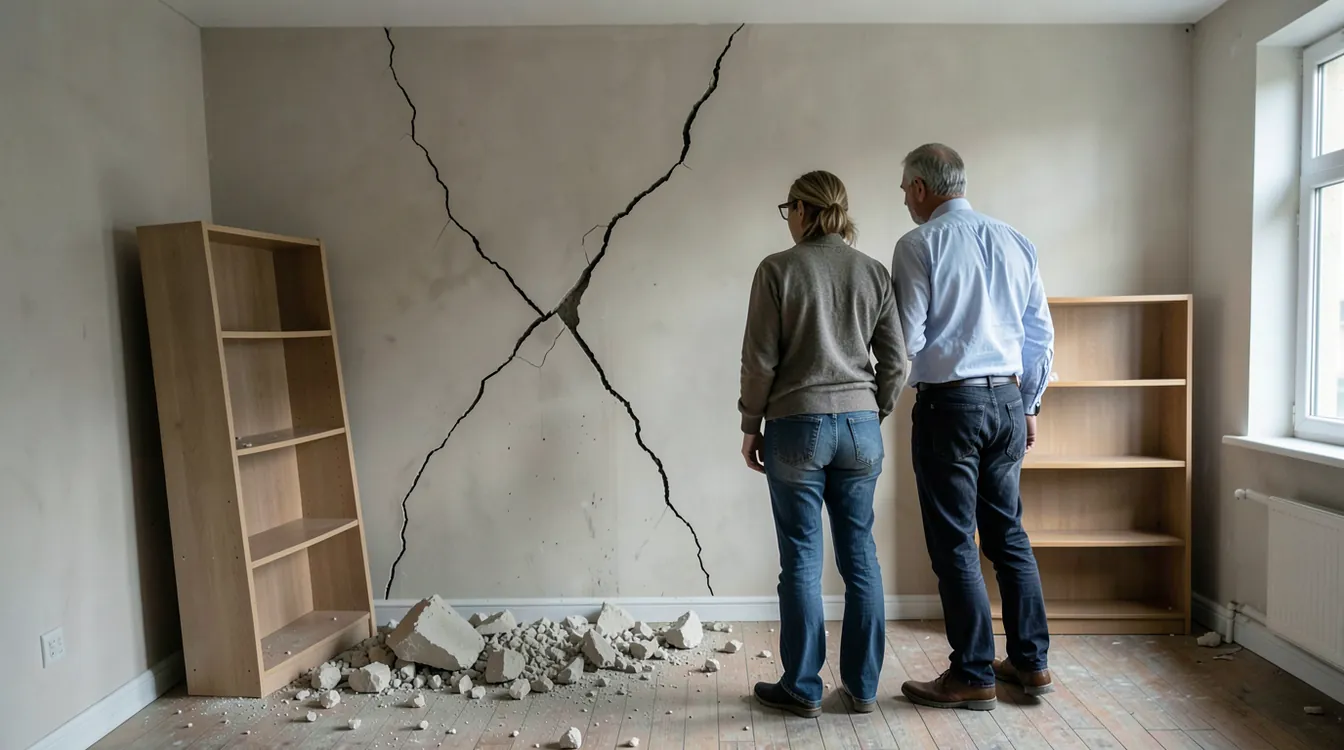
1. What Compulsory Earthquake Insurance Is and Who Must Take It Out (Law 6305 Articles 2, 3, 7, 10, 11)
Law No. 6305 on Disaster Insurance (Afet Sigortaları Kanunu) defines compulsory earthquake insurance in Article 2/1(ğ) as the compulsory insurance that covers, in buildings, the material damage caused directly by an earthquake, together with material damage from fire, explosion, tsunami and landslide arising because of the earthquake. Its purpose is narrow and precise: to pay for physical damage to the insured building.
The insurer is a single public body. Under Article 3/1, the cover is provided by the Natural Disaster Insurance Institution (Doğal Afet Sigortaları Kurumu, DASK), which has public legal personality, and Article 7/1 states that compulsory earthquake insurance cover is given exclusively by the Institution. Article 3/4 adds that the Institution's assets cannot be attached and that it cannot be pursued through bankruptcy proceedings. You buy the policy through an insurance company or agent, but that company concludes the contract in DASK's name and on its account, and DASK is the party that owes the indemnity.
Article 10/1 lists the buildings that must be insured: independent units within the scope of the Condominium Law No. 634; buildings constructed as dwellings on privately owned immovables registered in the land registry; independent units in those buildings used as shops, offices or for similar purposes; and dwellings built by the State, or with State credit, because of natural disasters. A flat in an apartment block, whether it is your home, a holiday flat or a flat you let out, falls into this list.
Under Article 10/3, the insurance is taken out by the owners or the holders of a usufruct right, and it is renewed every year. If you own a flat in Türkiye, the duty falls on you as owner, whether or not you live in the country. The General Conditions repeat the renewal duty in clause C.1 and add that, if the contract is not renewed by the policy's expiry date, DASK's liability for the cover ends on that date. Clause A.7 sets the policy term at one year, starting and ending at noon Türkiye time on the dates written in the policy.
The Law also builds checks into everyday transactions. Under Article 11/2, land registry offices cannot carry out registration transactions concerning buildings or units subject to this insurance unless it is documented that compulsory earthquake insurance has been taken out and is valid on the date of the transaction. Under Article 11/3, its existence is checked when water and electricity subscriptions are opened. An owner who lets the policy lapse between transactions, however, has no cover if the earthquake comes in that gap.
2. What DASK Pays For and What It Leaves Out (General Conditions A.1, A.3)
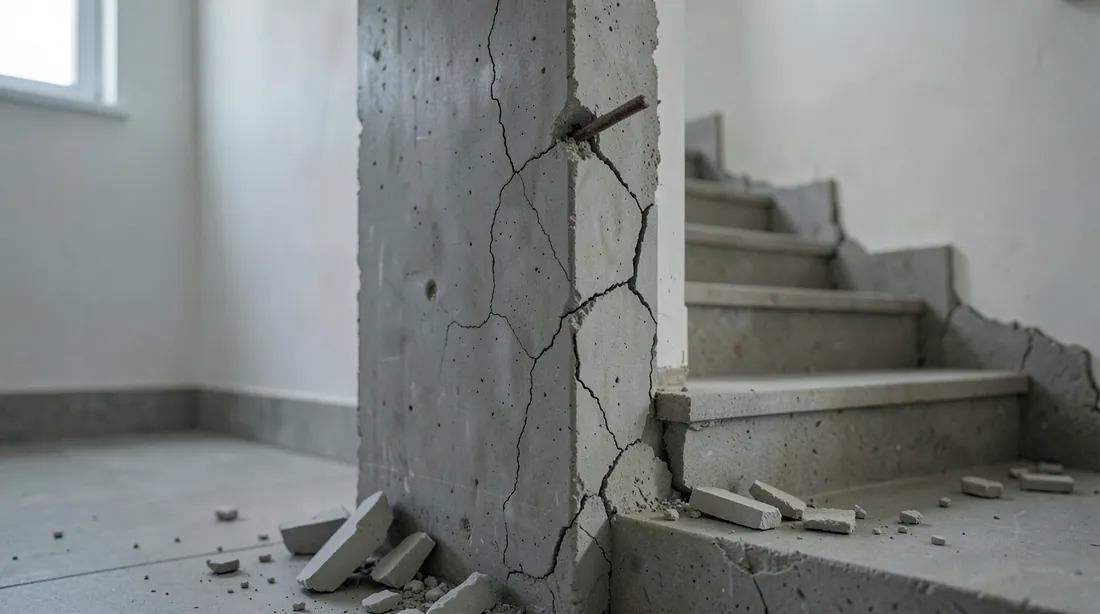
Clause A.1 of the General Conditions sets out the cover. DASK insures, up to the sum insured, the material damage caused directly by the earthquake and the damage caused to the insured building by fire, explosion, tsunami or landslide resulting from the earthquake. The clause names the parts of the building included: foundations, main walls, common walls separating independent units, garden walls, retaining walls, ceilings and floors, stairs, lifts, landings, corridors, roofs, chimneys and similar complementary parts of the structure.
Clause A.3 lists what is outside the cover, and for a family that has just left a damaged flat this list matters as much as the first one:
- Indirect losses (A.3.1): debris removal costs, loss of profit, business interruption, loss of rent, alternative accommodation and workplace costs, financial liabilities and similar indirect losses.
- Movable property (A.3.2): all movable property, household goods and similar items, so furniture, appliances, electronics and personal belongings are not paid for under this policy.
- Bodily injury (A.3.3): all bodily harm, including death.
- Non-pecuniary damages (A.3.4): claims for moral damages.
- Other causes (A.3.5): damage other than that caused by the earthquake and the fire, explosion, tsunami or landslide resulting from it.
- Gradual deterioration (A.3.6): damage that arises over time from the building's own defects and characteristics, without being linked to a particular earthquake.
The practical consequence is that the compulsory policy answers only one part of the loss: the cost of restoring the building up to the sum insured. Contents, the cost of living elsewhere while the flat is repaired, lost rent on a let property and injuries to the people inside are matters for other policies, if you have them, or for separate legal claims where the facts support one. Reading your own home or contents policy, if any, for an earthquake clause is a separate step from the DASK claim.
3. Buildings Outside the System and the Altered-Structure Rule (Law 6305 Articles 10, 12; A.2)
Not every building can carry the compulsory policy. Article 10/2 of Law No. 6305 excludes public housing and buildings used for public services, buildings of villagers in village settlement areas, and buildings used entirely for purposes other than residence, even if they fall within the Condominium Law. Clause A.2 of the General Conditions lists the excluded buildings in more detail, including buildings used entirely for commercial or industrial purposes, buildings that have no project and received no engineering service, buildings whose load-bearing system has been altered or weakened in a way that adversely affects it, buildings constructed contrary to the relevant legislation and their project in a way that adversely affects the load-bearing system, and buildings that the authorities have decided to demolish or that are unfit for use as a dwelling, neglected, ruined or abandoned.
Article 10/4 gives DASK the right not to insure buildings constructed contrary to the legislation and their project, and provides that it does not insure buildings whose load-bearing system has been altered or weakened in a way that adversely affects it.
Article 12 then places a continuing duty on the owner. Under Article 12/1, the owner or usufruct holder is obliged to take measures against the building being altered contrary to its project in a way that adversely affects its load-bearing system. Under Article 12/2, if it is established that the damage arose because of such an alteration, the owner loses the right to receive compensation from the insurance. For a buyer of a flat in an older block, this rule is the reason to ask, before buying, whether columns or walls were removed during a renovation of the unit or of a shop on the ground floor. The General Conditions also allow DASK, under clause C.2, to terminate the contract if the policyholder makes a change in the insured dwelling contrary to the legislation during the term of the insurance.
Whether a specific alteration adversely affected the load-bearing system, and whether the damage arose from it, are technical questions. If DASK relies on Article 12/2 to refuse payment, the finding can be examined and contested through the dispute routes described in section 7.
4. After the Earthquake: the Fifteen-Business-Day Notice and Your Other Duties (B.1)
The first legal step after the earthquake is notice. Under clause B.1.1 of the General Conditions, the policyholder or the insured must notify DASK, or the insurance company that concluded the contract in DASK's name and on its account, within fifteen business days at the latest from the date on which they learned that the risk occurred. For an owner living abroad, the period runs from the date you learned of it, which makes it worth recording how and when you heard about the damage.
Clause B.1 sets four further duties:
- Access (B.1.2): allow DASK's staff, or persons it authorises, to enter the damaged building for reasonable purposes and in an appropriate manner, and to take steps to reduce the loss.
- Documents (B.1.3): give DASK, at its request and without delay, the information and documents that help establish the amount of the loss and the evidence, and that are useful for its right of recourse, so far as the policyholder can obtain them.
- Estimate (B.1.4): give DASK or its authorised persons, within a reasonable and appropriate period, a written notice stating the estimated amount of the loss.
- Other policies (B.1.5): tell DASK about any other insurance contracts with earthquake cover on the insured building or place.
Before anything is cleared or repaired, record the damage: dated photographs and a slow video of every cracked wall, ceiling and floor, of the common parts such as the stairwell, columns and roof, and of the building from outside. Keep the policy number, the policy itself and its renewal history, the title deed details, and any correspondence with the building manager. If the building is unsafe, do not enter it to take photographs; the access duty in clause B.1.2 concerns DASK's own inspection.
5. Assessment, the 2% Deductible and Payment (Law 6305 Article 13; A.4, A.6, B.2-B.4, B.6)
The sum insured. Under clause A.4, the sum insured is the per-square-metre amount set for the dwelling's construction type in the Compulsory Earthquake Insurance Tariff and Instructions, multiplied by the dwelling's gross floor area. It can never exceed the maximum cover amount set in the Tariff and Instructions. Article 13/1 of Law No. 6305 provides that the tariff, the instructions and the maximum cover amount are determined each year by the Minister and published in the Official Gazette, so this guide gives no figures: check the amounts printed on your own policy. Clause A.5 adds that, where the sum insured exceeds the cost of rebuilding the dwelling, the excess part of the insurance is invalid, and DASK reduces the sum insured and refunds the excess premium for the current year on a daily basis.
Assessment. Under clause B.2, the cause, nature and amount of the damage are established by agreement between the parties, according to the findings of DASK or the persons it authorises. In a large-scale disaster, DASK may develop simplified damage assessment methods, including technological means, so that assessments can be made quickly. Under clause B.3.3, DASK must complete the necessary examinations as soon as possible after the documents on the amount of the damage are given to it, determine the damage and the indemnity, and notify the insured.
How the indemnity is calculated. Clause B.3.1 provides that, whether the damage is total or partial, the indemnity is calculated on the basis of the cost of rebuilding the building at market prices at the place and on the date of the earthquake, taking similar construction characteristics into account. The indemnity can in no case exceed the sum insured.
The deductible. Clause A.6 applies a deductible of 2% of the sum insured for each loss, and DASK is liable for the part of the damage exceeding that deductible. For this purpose, all damage occurring within each 72-hour period counts as one loss, which matters where aftershocks follow the main earthquake.
Payment. Two texts set the outer limit. Article 13/2 of Law No. 6305 provides that the compensation is paid within thirty days at the latest after the necessary information and documents and the damage assessment are complete. Clause B.4.1 of the General Conditions requires DASK, once the indemnity has been determined under the law and the policy, to pay the finalised amount, not exceeding the sum insured, to the person entitled within the following month at the latest. Clause B.4.2 makes advance payments to insureds after an earthquake possible, on principles set by the Treasury and on DASK's proposal; whether an advance is paid, and its amount and scope, are decided at that level.
After payment. Under clause B.6.1, DASK takes the place of the insured up to the amount it has paid, and any right of action the insured has against third parties for the damage passes to DASK to that extent. Under clause B.6.2, cover ends with payment where the damage is total; where it is partial, the sum insured is reduced by the amount paid from the date of the earthquake. Where the damage affects the load-bearing system, the dwelling must be repaired within the reasonable period stated in the loss adjuster's report for the cover to become operative again; otherwise, later damage during the policy term is not paid. Once the building is restored, the sum insured can be raised again against a premium calculated on a daily basis.
6. Statements in the Policy, the Cap and Top-Up Earthquake Cover (C.1-C.4)
Premium and start of cover. Under clause C.1, the premium is paid in advance against delivery of the policy, and if neither the whole premium nor the first instalment has been paid, DASK's liability does not begin.
What you declared. DASK concludes the contract on the basis of the policyholder's statements about the risk. Clause C.2 deals with untrue statements about the dwelling's gross floor area, construction type, address or damage in past earthquakes. If an untrue or incomplete statement would have led DASK to contract on heavier terms, DASK or the intermediary insurance company asks for the premium difference within fifteen days of learning of it. If the untrue statement is learned after the earthquake, the indemnity is paid in the proportion of the premium collected to the premium that should have been collected. If the policyholder intentionally failed to declare medium or heavier damage in past earthquakes, DASK may withdraw from the contract even if the risk has occurred, and it is entitled to the premium. A policy bought online in a few minutes is still a statement to an insurer, so the gross area and the construction type shown on it are worth checking against the title deed and the building's records.
One compulsory policy, and a top-up. Under clause C.3, more than one compulsory earthquake insurance cannot be taken out for the same building or unit. Where the value of the unit exceeds the sum insured under the compulsory policy, insurance companies may provide optional earthquake insurance for the part above that amount, on condition that the compulsory insurance has been taken out. Because the compulsory cover is capped and leaves contents out, owners of larger or higher-value flats can consider whether a voluntary policy fits their situation; its terms are those of that separate contract.
Sale of the flat. Under clause C.4, if the person with the insured interest changes during the term, the insurance continues with the new owner, who must have a transfer endorsement made and submit it to the land registry office to complete the sale.
7. Disputing DASK's Decision: Insurance Arbitration or the Commercial Court (Law 5684 Article 30; C.6, C.7)
If DASK refuses the claim, applies Article 12/2, reduces the payment under clause C.2, or assesses the damage at an amount you consider too low, there are two routes.
The Insurance Arbitration Commission. Article 30 of the Insurance Law No. 5684 (Sigortacılık Kanunu) establishes the Insurance Arbitration Commission (Sigorta Tahkim Komisyonu). Under the sentence added to Article 30/1 in 2013, for disputes arising from insurances made compulsory by the relevant legislation, beneficiaries may use the arbitration procedure even if the institution concerned is not a member of the insurance arbitration system. Clause C.6 of the General Conditions also states that the Commission may be applied to for disputes arising from the contract, where the event in dispute occurred after the membership date.
Article 30/13 sets the condition for applying. The person in dispute must have made the necessary applications to the insurer about the event and must document that the request was rejected in whole or in part. If the insurer does not answer in writing within fifteen business days of the application, that is also sufficient for applying to the Commission. A written claim to DASK, with proof of the date it was received, is therefore the first step towards arbitration.
Under Article 30/14, no application can be made to the Commission for a dispute already brought before a court or before a consumer arbitration committee under the consumer protection legislation, so the choice of route has to be made at the start. Under Article 30/16, the arbitrators must decide within four months at the latest from the date they were assigned; otherwise the dispute is resolved by the competent court, although the period can be extended with the express written consent of the parties. Under Article 30/12, awards below an amount fixed in the Law are final, and awards at or above it can be objected to once, within ten days of notification, before the Commission. Those amounts can be increased under Article 30/22, so check the current thresholds on your file.
The commercial court. Clause C.6 provides that, in lawsuits brought against DASK over disputes arising from the contract, the competent courts are those dealing with commercial cases at the place where DASK is located or where the risk occurred. An owner whose flat is in Antalya or Izmir can therefore bring the case where the earthquake happened.
The time limit. According to the General Conditions (clause C.7), all claims arising from the insurance contract become time-barred (zamanaşımına uğrar) two years from the end of the contract. Because the policy runs for one year, diary that date from the policy's expiry and act well before it.
For an owner who lives abroad, the claim, the arbitration application or the lawsuit can be handled by a lawyer in Türkiye under a written authority signed before a Turkish consulate, or before a notary abroad with an apostille. DASK or the Commission may still ask for original documents.
8. What DASK Pays Compared and a Checklist for Owners Abroad
The table shows which parts of an earthquake loss the compulsory policy answers and where the rest has to be looked for. Each row turns on the facts and on the wording of any other policy, and DASK's assessment of the building damage is itself open to the dispute routes in section 7.
| Type of loss | Paid by compulsory earthquake insurance? | Legal basis | Where else to look |
|---|---|---|---|
| Cracks and structural damage to the building (walls, columns, floors, stairs, roof) | Yes, up to the sum insured, after the 2% deductible per loss | Law 6305 Art. 2/1(ğ); A.1; A.6; B.3.1 | Optional earthquake insurance for value above the sum insured (C.3) |
| Fire, explosion, tsunami or landslide caused by the earthquake | Yes, damage to the insured building | Law 6305 Art. 2/1(ğ); A.1 | Your own home policy, depending on its terms |
| Furniture, appliances, belongings | No | A.3.2 | A voluntary contents policy with earthquake cover, depending on its terms |
| Rent loss, hotel or alternative accommodation, debris removal | No | A.3.1 | A voluntary policy that covers these costs, if you hold one |
| Injury or death of occupants | No | A.3.3 | Other insurances or a separate legal claim, depending on the facts |
| Damage caused by an alteration of the load-bearing system | No: the right to compensation is lost | Law 6305 Art. 12/2; A.2 | A claim against the person who made the alteration, depending on the facts |
Checklist for an owner who lives abroad
- Check your policy now: the sum insured, the gross area and construction type declared, the expiry date, and whether it has been renewed each year (Law 6305 Article 10/3; C.1, C.2).
- Ask about past alterations to the load-bearing system of your unit and the shops below, because damage arising from them removes the right to compensation (Article 12/2).
- Notify within fifteen business days of learning of the damage, to DASK or the insurance company that sold the policy (B.1.1).
- Record the damage with dated photos and video, without entering an unsafe building, and keep every document DASK asks for (B.1.3).
- Send a written estimate of the loss within a reasonable period (B.1.4), and disclose any other earthquake policy (B.1.5).
- Read the assessment against the rebuilding-cost rule in B.3.1 and the 2% deductible in A.6.
- If the answer is a refusal, a reduction or silence for fifteen business days, choose between the Insurance Arbitration Commission (Law 5684 Article 30/13-14) and the commercial court (C.6).
- Diary the time limit: two years from the end of the contract, according to the General Conditions (C.7).
Compulsory earthquake insurance is a narrow, rule-bound policy. The owner's part is to keep it valid every year, to know what it leaves out, to notify within fifteen business days, to check the assessment against the General Conditions, and, if DASK refuses or underpays, to choose the right route before the time limit runs out.
Scope. This page describes the Turkish rules as in force in October 2026: Articles 2, 3, 7, 10, 11, 12 and 13 of Law No. 6305 on Disaster Insurance; clauses A.1 to A.7, B.1 to B.4, B.6, C.1 to C.4, C.6 and C.7 of the Compulsory Earthquake Insurance General Conditions; and Article 30 of the Insurance Law No. 5684. Amounts such as the maximum cover, the per-square-metre tariff, premiums and arbitration thresholds change and are not given here. It does not cover special arrangements made after particular earthquakes, and it is general information, not legal advice on your case.
Frequently Asked Questions
Does DASK earthquake insurance pay for my furniture and belongings in Türkiye?
No. Clause A.3.2 of the Compulsory Earthquake Insurance General Conditions places all movable property, household goods and similar items outside the cover. The compulsory policy pays for material damage to the building caused by the earthquake, and by fire, explosion, tsunami or landslide resulting from it, up to the sum insured (clause A.1). Contents can only be covered by a separate voluntary policy, depending on its terms.
Will DASK pay for a hotel or for the rent I lose while my flat is repaired?
No. Clause A.3.1 excludes debris removal costs, loss of profit, business interruption, loss of rent, alternative accommodation and workplace costs, and similar indirect losses. Bodily injury, including death, is also excluded under clause A.3.3.
I am a foreign owner and live abroad. Do I have to take out compulsory earthquake insurance?
Article 10/3 of Law No. 6305 requires the owners or usufruct holders of the buildings listed in Article 10/1, which include independent units under the Condominium Law and dwellings on registered private land, to take out the insurance and renew it every year. Under Article 11/2, land registry offices cannot carry out registration transactions for such units unless a valid policy is documented on the date of the transaction.
How long do I have to report earthquake damage to DASK?
Under clause B.1.1 of the General Conditions, you must notify DASK, or the insurance company that concluded the contract in its name, within fifteen business days at the latest from the date you learned that the earthquake damage occurred. You must also allow DASK's inspection, provide the documents it requests and give a written estimate of the loss.
When does DASK have to pay?
Article 13/2 of Law No. 6305 provides that the compensation is paid within thirty days at the latest after the necessary information and documents and the damage assessment are complete. Clause B.4.1 of the General Conditions requires the finalised indemnity to be paid within the following month at the latest. A deductible of 2% of the sum insured applies to each loss, and damage within each 72-hour period counts as one loss (clause A.6).
Can DASK refuse to pay because the building was altered?
Yes, if the conditions of the Law are met. Under Article 12/2 of Law No. 6305, if it is established that the damage arose from an alteration of the building contrary to its project that adversely affected its load-bearing system, the owner loses the right to compensation. Whether that is so in a given case is a technical question that can be contested.
How do I challenge DASK's assessment or refusal?
You can apply to the Insurance Arbitration Commission: under Article 30/1 of the Insurance Law No. 5684, beneficiaries of compulsory insurance may use arbitration even if the institution is not a member, and under Article 30/13 you must first apply to the insurer and document a full or partial rejection, or its failure to answer in writing within fifteen business days. Alternatively, you can sue in the court dealing with commercial cases where DASK is located or where the earthquake occurred (clause C.6). Under Article 30/14, a dispute already before a court cannot be taken to the Commission. According to the General Conditions, claims become time-barred two years from the end of the contract (clause C.7).
Talk to someone about an earthquake damage claim
Send us the location of the property, your compulsory earthquake insurance policy and its renewal history, when and how you learned of the damage, photos of the damage, and any notice, assessment or decision you have received from DASK. We will tell you how the policy applies to your facts, whether the assessment can be challenged and which route fits your case.